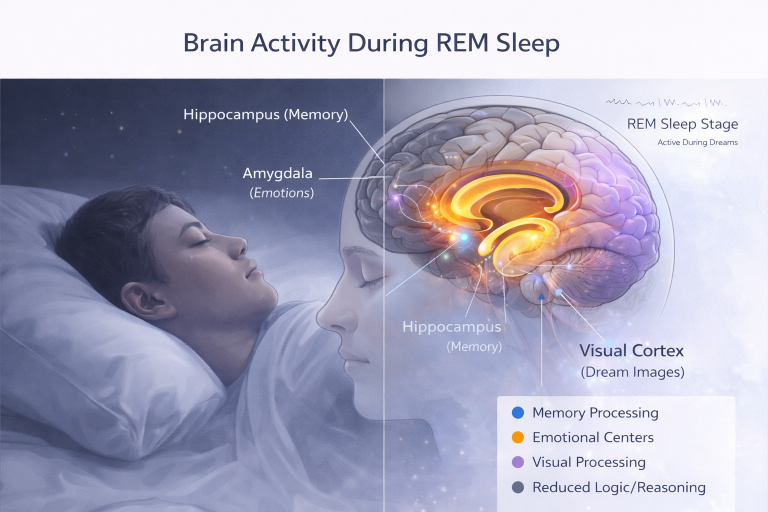

What happens to your brain when you die isn’t just one of humanity’s oldest questions — it’s also one of the most scientifically compelling mysteries neuroscience has ever attempted to crack. For centuries, death was treated as a purely philosophical or religious matter. But in the last few decades, brain scientists, neurologists, and medical researchers have started pulling back the curtain — and what they’ve found is equal parts extraordinary and deeply unsettling.
Near-death experiences aren’t myths. They aren’t just hallucinations dismissed by mainstream science. And they aren’t simply the product of wishful thinking. Real, peer-reviewed research suggests that the dying brain undergoes a cascade of measurable, extraordinary events — some of which challenge our most fundamental assumptions about consciousness, identity, and what it means to be alive.
By the end of this post, you’ll understand the documented neuroscience behind the dying brain, the leading scientific theories explaining near-death experiences, the strange phenomenon of terminal lucidity, and the questions that even the world’s top neuroscientists cannot yet answer.
The Final 7 Minutes: What Neuroscience Knows About the Dying Brain
For most of human history, death was considered a hard stop. The heart stops. The brain goes dark. End of story.
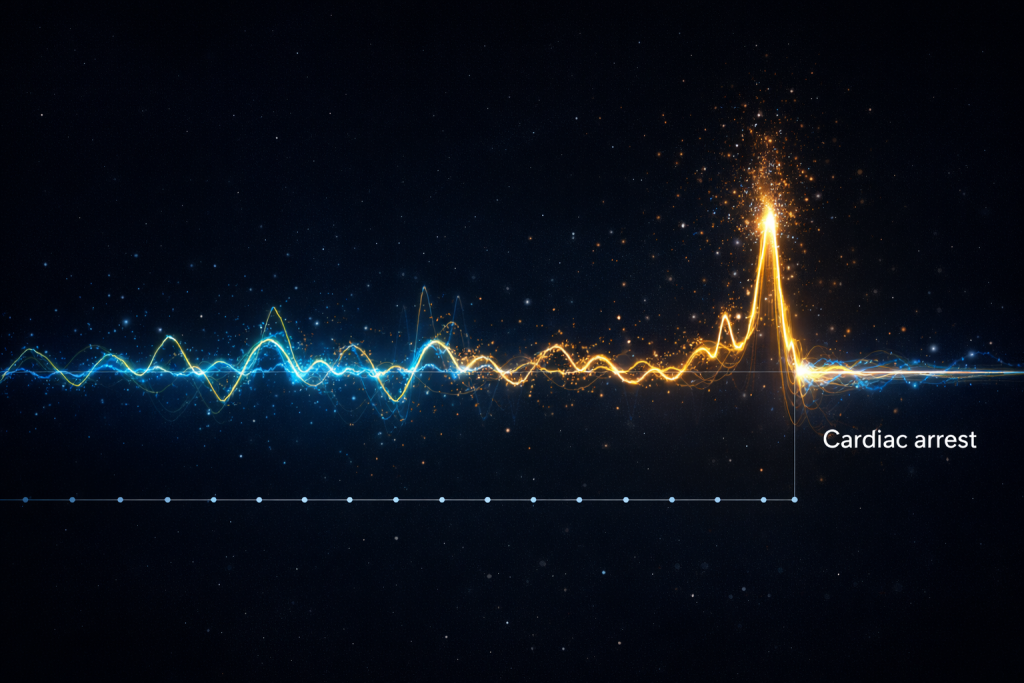
Then, in 2013, a landmark study from the University of Michigan changed everything. Researchers led by Dr. Jimo Borjigin recorded the brain activity of rats in the moments after cardiac arrest. What they found stunned the scientific community. Instead of simply shutting down, the dying brains showed a dramatic surge of coordinated neural activity — more intense, in some cases, than anything recorded during normal waking consciousness.
This wasn’t random electrical noise. The activity was organised, coherent, and occurred in regions of the brain associated with conscious perception. In other words, the dying brain wasn’t switching off. It was, at least briefly, switching on — firing at extraordinary levels in its final moments.
A follow-up human study published in the Proceedings of the National Academy of Sciences in 2023 replicated this finding. Researchers analysed the brain activity of four comatose patients, died after life support was withdrawn. In two of those patients, gamma wave activity — the brain’s highest-frequency, most complex oscillations — surged dramatically at the moment of cardiac arrest. Crucially, this activity centred on the posterior cortical hot zone, the brain region most strongly linked to conscious experience and dreaming.
So when people describe vivid, hyper-real near-death experiences in the minutes surrounding clinical death, neuroscience now has a plausible biological mechanism to point to. The brain, it seems, doesn’t go quietly. Furthermore, these surges appear to happen in a remarkably consistent window — roughly five to seven minutes after blood flow to the brain begins to stop.
This matters enormously. As it means the experiences people report — the tunnels, the lights, the sense of leaving the body — may not be imagined. They may be the direct result of a dying brain operating at peak intensity for one final, extraordinary moment.
Oxygen Deprivation and Why the Brain Hallucinates at Death
To understand what happens to your brain when you die, you have to understand what oxygen deprivation does to neural tissue . And it’s far stranger than most people realise.
The brain is extraordinarily oxygen-hungry. It uses roughly 20% of all the oxygen your body consumes, despite accounting for only about 2% of your body weight. When blood flow stops, neurons begin to malfunction within seconds. But “malfunction” doesn’t mean silence. In many cases, it means chaos.
Think of it this way. Imagine the brain’s normal function as a well-managed office building. Every department is coordinated, regulated, and running on schedule. Now cut the power. The emergency lighting flickers on. Some departments start acting erratically — sending signals to each other without the usual oversight. Other systems, normally kept in check, suddenly fire without restraint.
That’s approximately what happens neurologically during oxygen deprivation. The inhibitory neurons — the brain’s “brakes” — tend to fail first. This releases excitatory activity across wide regions of the cortex simultaneously. The result is a massive, uncoordinated burst of neural firing that can produce vivid sensory experiences, including visual phenomena, emotional surges, and alterations in time perception.
This is why many near-death experience researchers point to hypoxia — oxygen starvation — as a core driver of the tunnel-of-light phenomenon. As oxygen drops, the visual cortex may generate spontaneous patterns of light. The characteristic “tunnel” shape could reflect the brain’s peripheral visual processing collapsing inward, since central vision tends to persist longer than peripheral vision during hypoxic episodes.
Moreover, the emotional intensity that survivors describe — the overwhelming sense of peace, the feeling of being loved — may connect to the amygdala and anterior cingulate cortex losing normal regulatory control. When those emotional governors go offline, feelings can flood the conscious experience unchecked.
That said, oxygen deprivation alone doesn’t explain everything. Some near-death experiences occur in patients whose blood oxygen levels were never critically low. So scientists have looked elsewhere.
The DMT Hypothesis: Is Your Brain Releasing a Psychedelic When You Die?
Here is where things get genuinely extraordinary.
Dimethyltryptamine — DMT — is a naturally occurring compound produced in trace amounts within the human body. It belongs to the same chemical family as serotonin and melatonin. And it is also one of the most potent psychedelic substances to science.
When people consume DMT in ceremonial or experimental settings, they reliably report experiences that overlap strikingly with near-death accounts. Users describe leaving their physical body, travelling through tunnels of light, encountering entities or presences, experiencing a life review, and feeling a profound sense of unconditional love or cosmic understanding. The parallels are almost uncomfortable in their specificity.
The hypothesis — advanced most prominently by Dr. Rick Strassman of the University of New Mexico — is that the pineal gland or other brain tissue releases a significant surge of endogenous DMT at the moment of death. This surge, the theory goes, generates the vivid, structured experiences that near-death survivors describe.
There is supporting circumstantial evidence. DMT has been detected in the cerebrospinal fluid of living mammals, and a 2019 study published in Scientific Reports confirmed that rat brains produce and release DMT, with concentrations increasing significantly during cardiac arrest. Whether human brains do the same at death remains unconfirmed by direct evidence — but the circumstantial case is compelling.
Importantly, the DMT hypothesis isn’t incompatible with the oxygen-deprivation model. Both mechanisms could operate simultaneously. As blood flow drops, oxygen falls, inhibitory circuits collapse, and simultaneously the pineal gland releases endogenous DMT. The combined effect could produce experiences of extraordinary vividness and emotional intensity — experiences that feel, to the person having them, more real than ordinary waking life.
This is precisely what near-death survivors consistently report. Not “I had a weird dream.” But: “It was the most real experience of my entire life.”

Terminal Lucidity: When the Dying Brain Defies Everything We Know
Of all the phenomena surrounding death and the dying brain, terminal lucidity may be the most scientifically baffling.
Terminal lucidity refers to an unexpected, often dramatic return of mental clarity in patients with severe neurological conditions — typically in the hours or days immediately before death. Patients with advanced Alzheimer’s disease, who haven’t recognised family members in years, suddenly speak coherently and warmly, recalling names, sharing memories, saying genuine goodbyes. Patients with brain tumours, severe dementia, or other conditions that had robbed them of personality and memory suddenly become themselves again — fully, unmistakably — before dying.
Hospice nurses and palliative care physicians have documented this phenomenon for decades. It isn’t rare. A review published in Frontiers in Aging Neuroscience found accounts spanning two centuries, across multiple cultures and neurological conditions.
Here’s what makes terminal lucidity so scientifically confounding. The brain tissue is physically destroyed, responsible for memory and personality, in conditions like Alzheimer’s. Neurons are dead. The infrastructure for the kind of cognition these patients suddenly display should not exist. And yet, somehow, it does — at least briefly.
Why Terminal Lucidity Challenges Neuroscience
Several explanations proposed, never satisfies them fully . One theory suggests that neuroinflammation — which suppresses function in many degenerative diseases — suddenly decreases in the dying body, allowing remaining neurons to function more effectively. Another proposes that the dying brain, like a circuit experiencing its last surge of power, temporarily achieves a kind of coherence it couldn’t sustain in disease.
However, neither explanation accounts for cases where the damage is structural and irreversible. If neurons are dead, reducing inflammation won’t bring them back. This has led some researchers to cautiously suggest that our model of consciousness as purely and exclusively a product of brain tissue may be incomplete.
This is not a mystical claim. It’s a scientific one. Terminal lucidity doesn’t prove the existence of a soul or an afterlife. But it does suggest that the relationship between brain structure and consciousness is more complex — and more mysterious — than current neuroscience fully accounts for.
Near-Death Experiences Explained: Tunnels, Light, and Life Reviews
So what exactly are near-death experiences, and what does science say is happening during them?
Near-death experiences (NDEs) are structured, vivid conscious events reported by people who have come close to clinical death — through cardiac arrest, drowning, severe trauma, or other life-threatening events. They are remarkably consistent across cultures, ages, and belief systems. That consistency itself is scientifically significant.
The core features of a classic NDE include an out-of-body experience (OBE), where the person seems to observe their own body from above. They typically travel through a dark tunnel toward an intense, warm light. They may encounter deceased relatives or feel the presence of a loving entity. Many experience a life review — a rapid, panoramic replay of their personal history. And almost universally, they report an overwhelming sense of peace, love, and the feeling that death is not something to fear.
The out-of-body component has been studied most rigorously. Some researchers have placed objects on high shelves in hospital cardiac arrest units — objects only visible from above — to test whether resuscitated patients can accurately describe them. Results have been mixed. A few verified cases exist, but controlled studies haven’t produced consistent, replicable results.
The life review phenomenon is particularly interesting from a neuroscience perspective. A 2023 study — the same University of Michigan research mentioned earlier — found that the surge of gamma activity at death centred partly on regions associated with autobiographical memory and self-referential processing. In other words, the brain’s memory and self-identity systems appear to activate powerfully at the moment of death. The life review may not be metaphorical. It may be biologically literal.
Furthermore, cross-cultural consistency of NDEs is striking. Whether a person is Hindu, Christian, secular, or from a pre-literate culture, the core elements recur. This universality suggests a common neurological mechanism. Not a culturally conditioned story, but something arising from the structure of the human brain itself.
What Happens to Memory, Consciousness, and the Sense of Self
One of the most profound questions buried inside “what happens to your brain when you die” is this: what happens to you?
Memory, consciousness, and the sense of self are the three pillars of personal identity. And each of them behaves in ways during dying that challenge our ordinary assumptions.
Memory, as mentioned, appears to activate dramatically at the point of cardiac arrest. But it’s not random memory — the gamma wave surges focus on autobiographical regions. The brain seems to retrieve the story of your life, not fragmentary images. This could explain why life reviews in NDEs feel coherent and narrative rather than chaotic.
Consciousness is more complicated. Current neuroscience treats consciousness as an emergent property of brain activity — it arises from neural processes the way wetness arises from water molecules. On this model, when the brain stops, consciousness stops. But the evidence from NDEs and from brain activity studies suggests consciousness may persist — and even intensify — for a brief but measurable period after clinical death. This doesn’t prove that consciousness can exist without a brain indefinitely. But it does complicate the simple “brain off, you off” model.
The sense of self — the feeling of being a unified, continuous “I” — may be the most fragile of the three. Several NDE survivors report that the boundaries of the self dissolved during their experience. They didn’t feel like an individual looking out at the world. They felt like they were the world — boundless, connected, without edge. Neurologically, this could reflect the temporary collapse of the default mode network, the brain system responsible for generating and maintaining the narrative self.
Additionally, the suppression of the claustrum — a thin brain structure linked to the integration of conscious experience — has been proposed as another mechanism. When the claustrum loses its integrating function, the usual boundary between self and environment may dissolve, producing precisely the ego-dissolution that NDE survivors describe.
What Science Still Cannot Explain About the Dying Brain
For all the remarkable progress neuroscience has made, there are questions that remain stubbornly, honestly unanswered. And any intellectually honest account of what happens to your brain when you die must acknowledge them.
First, the “hard problem of consciousness” — philosopher David Chalmers’ term — remains unsolved. We can map neural correlates of conscious experience. We can describe which brain regions activate during perception, emotion, and memory. But we still have no satisfying explanation for why any of this produces subjective experience at all. Why does neural activity feel like something from the inside? No equation, no brain scan, no theory has cracked this.
Second, the verified out-of-body cases — rare as they are — remain scientifically unaccounted for. If consciousness is entirely brain-generated, it shouldn’t be possible for a person to accurately report events occurring outside their sensory range while clinically dead. Yet a small number of documented cases suggest exactly this. These cases haven’t been replicated under rigorous conditions, but they haven’t been definitively debunked either.
Third, terminal lucidity has no mechanistic explanation that fully satisfies. It remains, in the words of researchers who study it, one of the most provocative phenomena in clinical medicine.
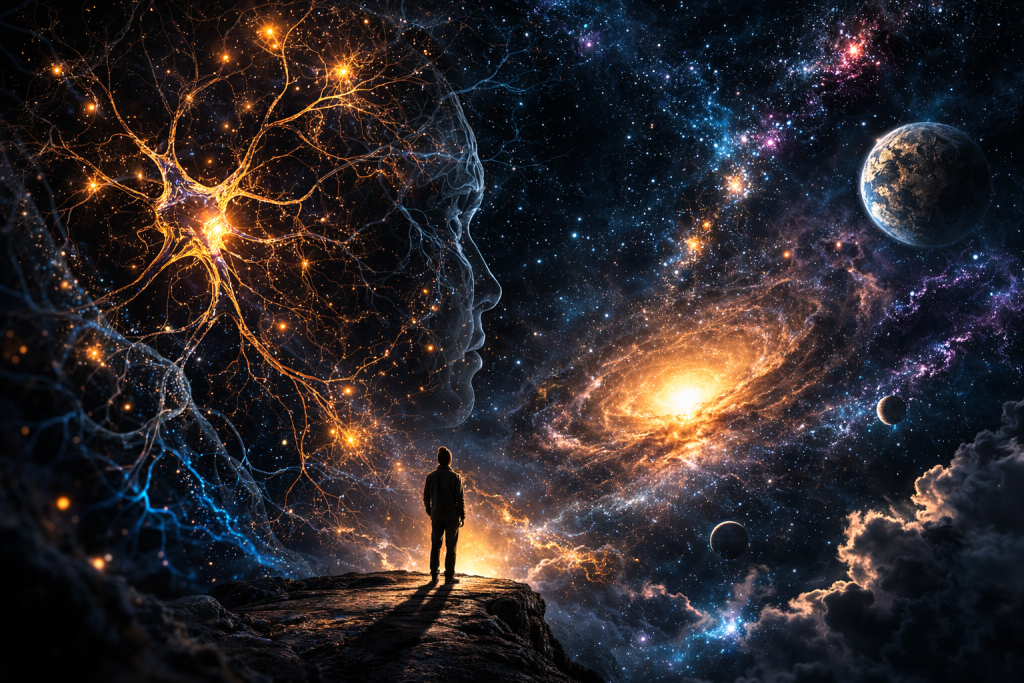
Finally, the transformative aftereffect of NDEs is itself a scientific puzzle. Survivors consistently report permanent, positive personality changes — reduced fear of death, increased empathy, greater life satisfaction, shifts in values. These changes persist for decades. They are documented, measurable, and reproducible across studies. What kind of neurological event — however intense — produces lasting personality transformation from a single experience that typically lasts minutes? That question, too, remains open.
Science has illuminated an enormous amount about the dying brain. But the edges of that illumination are surrounded by a darkness that is, for now, genuinely unknown.
Frequently Asked Questions
What actually happens in the brain at the moment of death?
At the moment of cardiac arrest, the brain doesn’t simply go dark. Research — including a landmark 2023 study published in the Proceedings of the National Academy of Sciences — shows a dramatic surge of high-frequency gamma wave activity in regions linked to consciousness and memory. This surge appears to represent the brain’s most intense period of coordinated activity, concentrated in areas associated with dreaming and autobiographical memory. The process unfolds over approximately five to seven minutes before neural activity fully ceases.
Are near-death experiences scientifically real?
Yes — in the sense that they are real experiences, consistently reported, and increasingly supported by measurable neuroscience. Whether they reflect something beyond the brain’s activity remains scientifically unresolved. However, the experiences themselves are not dismissed by mainstream neuroscience. Peer-reviewed studies have documented their content, their cross-cultural consistency, and potential neurological mechanisms including gamma wave surges, oxygen deprivation effects, and possible endogenous DMT release.
What is the DMT theory of near-death experiences?
The DMT hypothesis proposes that the pineal gland or surrounding brain tissue releases a surge of dimethyltryptamine — a naturally occurring psychedelic compound — at or near the moment of death. DMT-induced experiences in controlled settings closely parallel classic near-death accounts. A 2019 study confirmed that rat brains produce and release DMT during cardiac arrest. Direct evidence in humans remains limited, but the hypothesis is taken seriously within neuroscience research circles.
What is terminal lucidity and why is it so strange?
Terminal lucidity is the sudden, unexpected return of mental clarity in severely cognitively impaired patients — typically in the hours or days before death. Alzheimer’s patients who haven’t recognised family members in years may suddenly speak coherently, recall memories, and say meaningful goodbyes. The scientific puzzle is that in many of these conditions, the brain tissue responsible for such cognition has been physically destroyed. No current neurological model fully explains how this temporary restoration occurs.
Does near-death experience research prove there’s life after death?
No — and responsible NDE researchers are clear about this. What the research does show is that consciousness and brain activity behave in unexpected, poorly understood ways at the threshold of death. The evidence challenges oversimplified models of brain-death equivalence, but it does not constitute proof of survival beyond death. What it does provide is a compelling scientific case that the dying brain is far more active, complex, and mysterious than anyone previously assumed.
Conclusion
The question of what happens to your brain when you die sits at the exact intersection of science’s greatest ambitions and its most honest limitations. Neuroscience has given us extraordinary tools — real-time brain imaging, cardiac arrest studies, decades of carefully collected clinical observations — and the picture emerging from all of it is astonishing.
The dying brain doesn’t surrender quietly. It surges. It floods with gamma waves, releases ancient chemical compounds, activates the very regions that construct our sense of self and personal history, and produces experiences so vivid and emotionally overwhelming that the people who survive them are permanently changed.
What lies at the far edge of that surge — whether something persists beyond the body’s failure, whether consciousness is strictly a biological product or something more — remains genuinely unknown. And that unknowing isn’t a failure of science. It’s an invitation to keep asking better questions.
At FactoPiaX, that’s exactly what we do. If this post made you see death — and life — a little differently, explore more of our deep-dive content on the human brain, consciousness, and the biggest unsolved mysteries of the natural world. And if you’re a visual learner, check out our related YouTube video below for a compelling walkthrough of everything covered here.
Discover more from Factopiax
Subscribe to get the latest posts sent to your email.