
Every year, doctors put hundreds of millions of people to sleep for surgery. They control the dose with precision. They monitor vital signs in real time. And They bring patients back safely — almost every single time. Yet if you asked your anesthesiologist to explain exactly how anesthesia works on the brain, they would give you a long pause before answering.
The truth is remarkable. Understanding how anesthesia works remains one of the most puzzling open questions in modern medicine. We’ve been using it since 1846. We’ve performed billions of surgeries with it. And still, the full mechanism — the precise way it shuts off conscious experience — continues to escape us. That gap between what we do and what we know is the strange, fascinating story this post will explore.
By the end, you’ll understand the leading theories, what makes anesthesia so different from sleep, why awareness during surgery still happens, and what cutting-edge 2025 research is now revealing.
What Anesthesia Actually Does — And What It Doesn’t
Most people assume anesthesia simply puts you to sleep. That’s a comforting idea, but it misses the mark.
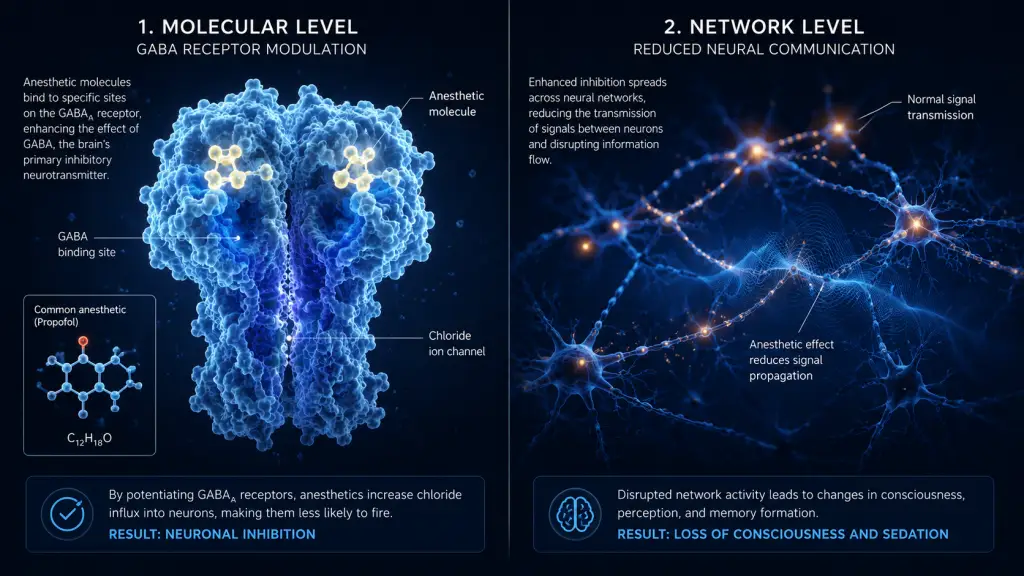
General anesthesia doesn’t just make you unconscious. It also blocks pain signals, suppresses memory formation, and keeps your muscles from moving involuntarily. These are four separate effects happening simultaneously — and each one may involve a different mechanism. That’s part of what makes the puzzle so deep.
Local anesthesia, by contrast, works very differently. It targets specific nerves in a body region and blocks sodium ion channels, preventing electrical signals from traveling to the brain. Dentists use this type. You stay fully awake while a patch of your face goes numb. The mechanism here is actually well understood — it’s a chemical lock on a specific door.
Sedation sits somewhere in between. It reduces anxiety and awareness without knocking you fully unconscious. Drugs like midazolam affect GABA receptors in the brain, producing calming effects that are reasonably well mapped.
However, general anesthesia is the real mystery. When an anesthesiologist administers drugs like propofol, sevoflurane, or ketamine to put you completely under, the exact process by which your subjective experience — your sense of being you — simply stops is not fully understood. The drugs clearly work. The why is still being debated.
The Competing Theories Trying to Explain Anesthesia
Scientists have proposed several major theories over the decades. Each one captures part of the truth. None of them captures all of it.
The Lipid Theory is the oldest. It dates back to 1899, when Hans Horst Meyer and Charles Ernest Overton independently noticed that the strength of an anesthetic correlated with how well it dissolved in fat. Because neurons are wrapped in fatty cell membranes, researchers assumed anesthetics dissolved into those membranes and disrupted their structure. This seemed elegant — until scientists realized lipid disruption didn’t clearly explain the specific, targeted effects of modern anesthetics.
The Protein Receptor Theory replaced it as the dominant model. By the 1980s, evidence showed that anesthetic drugs bind to specific protein channels in neurons — particularly GABA-A receptors and NMDA receptors. These interactions inhibit excitatory signals and enhance inhibitory ones, effectively quieting neural activity. This theory explains a great deal. Most anesthesiologists today work with it as their practical framework.
The Neural Network Disruption Theory goes a level higher. Rather than focusing on individual receptors, this model suggests anesthesia works by breaking the coordinated communication between brain regions. Consciousness, in this view, depends on brain areas talking to each other in complex, synchronized patterns. Anesthetics scramble that coordination. The result isn’t that individual neurons stop firing — it’s that they stop working together.
The Microtubule Theory is the most controversial. Physicist Roger Penrose and anesthesiologist Stuart Hameroff proposed that consciousness arises from quantum processes inside tiny protein structures called microtubules, found in neurons. Anesthetics, they argue, interfere with these quantum computations. Most neuroscientists remain skeptical. However, no one has definitively disproved it either.
Anesthesia vs. Sleep — Why They’re Nothing Alike
A common assumption is that going under anesthesia is like having a very deep sleep. In reality, the two states are remarkably different — and that difference tells us something important about how anesthesia works.
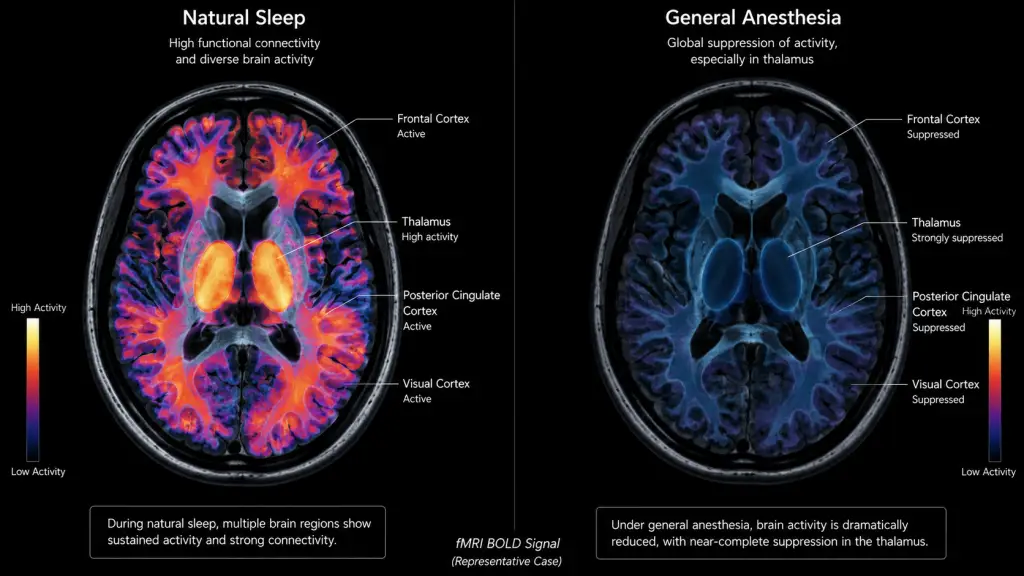
During natural sleep, your brain remains highly active. It cycles through distinct stages. In REM sleep, your brain shows activity patterns almost indistinguishable from waking consciousness. You dream, you consolidate memories, your neurons communicate in organized, rhythmic waves.
Under general anesthesia, none of that happens. Brain scans reveal a completely different picture. The thalamus — a central relay hub for sensory information — becomes dramatically suppressed. Communication between the front and back of the brain, which is crucial for conscious experience, nearly collapses. EEG readings show slow, irregular activity that looks nothing like any natural sleep stage.
Furthermore, you don’t build up “sleep debt” from anesthesia the way you do from a sleepless night. Waking from surgery, patients often feel groggy, yes — but not because they were resting. Many feel the opposite of rested. That’s because anesthesia bypasses the restorative processes that sleep actually delivers.
This distinction matters enormously for the science. If anesthesia worked like sleep, we could study sleep to understand it. But anesthesia creates a fundamentally different brain state — one we don’t have a complete map of yet. Understanding how anesthesia works on a neurological level requires building that map from scratch.

Anesthesia Awareness: When the Mystery Has Consequences
Here is where the incomplete understanding of anesthesia stops being abstract and becomes urgently real.
Anesthesia awareness occurs when a patient regains some degree of consciousness during surgery while still unable to move or communicate. The muscle-relaxing drugs used alongside anesthetics can prevent any visible response, even when the brain wakes up. This creates a terrifying situation: you are aware, possibly feeling pain, but completely paralyzed and unable to signal distress.
According to research published in the journal Anesthesiology, awareness during general anesthesia occurs in approximately 1 to 2 cases per 1,000 procedures. That sounds rare. But with hundreds of millions of surgeries performed globally each year, the numbers add up to a serious patient safety concern.
Why does it happen? Largely because anesthesiologists cannot directly measure consciousness. They monitor indirect signals — heart rate, blood pressure, brain wave patterns via EEG — but none of these give a definitive reading of subjective experience. The Bispectral Index monitor, or BIS monitor, was developed specifically to estimate anesthetic depth using EEG data. However, studies have shown it doesn’t eliminate awareness entirely.
This gap exists because we still don’t have a reliable “consciousness meter.” We don’t have one because we don’t fully understand what consciousness is, or precisely what anesthetics do to it. The practical consequence of this theoretical gap is that a small but significant number of patients experience one of medicine’s most distressing complications each year.
The Hard Problem of Consciousness at the Centre of Everything
To understand why anesthesia remains a mystery, you need to understand why consciousness itself remains a mystery. The two problems are deeply connected.
Philosopher David Chalmers famously coined the term “the hard problem of consciousness” in 1995. The easy problems of consciousness — explaining how the brain processes information, controls behavior, and integrates sensory signals — are difficult but tractable. Scientists are making progress on them.
The hard problem is different. It asks: why does any of this processing feel like anything at all? Why is there subjective experience — a sense of what it’s like to be you — rather than just blind information processing happening in the dark?
Neuroscience has not answered this question. We can point to brain regions associated with consciousness. We can disrupt it with anesthetics. Also, We can measure changes in neural activity that correlate with it. However, we cannot explain the fundamental relationship between physical brain activity and the private, first-person experience of being conscious.
Anesthesia sits right at the center of this mystery. When a patient goes under, their subjective experience disappears. When they wake up, it returns. If we truly understood how anesthesia works, we would essentially understand how the brain generates consciousness — and that would be one of the most significant scientific discoveries in human history.
What 2025 Research Is Beginning to Reveal
The science is moving forward, even if slowly. Recent advances are giving researchers sharper tools than ever before, and the findings are genuinely exciting.
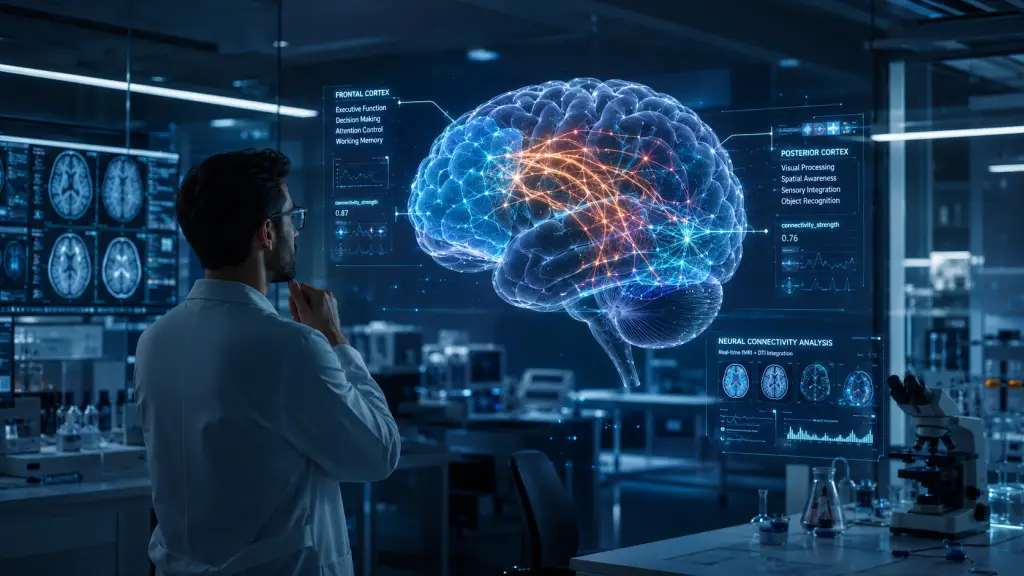
High-resolution brain imaging techniques, including fMRI and high-density EEG, now allow scientists to watch in real time how different anesthetic drugs alter communication patterns across the brain. A 2024 study from Massachusetts General Hospital showed that propofol doesn’t simply suppress all brain activity — it creates a distinctive pattern of disrupted connectivity between the frontal cortex and posterior brain regions. This targeted disconnection, rather than a global shutdown, may be the key signature of drug-induced unconsciousness.
Meanwhile, researchers at the University of Michigan have been building detailed computational models of how anesthetic drugs interact with thalamocortical circuits — the loops that connect the thalamus and cortex and are central to conscious awareness. Their work, published in PLOS Computational Biology, suggests that different anesthetics achieve unconsciousness through different routes, which may explain why a patient’s response can vary significantly from drug to drug.
On the microtubule front, a 2023 study from the University of Alberta found measurable quantum effects in biological systems at body temperature, lending a small but notable boost to the Penrose-Hameroff hypothesis. The mainstream scientific community remains cautious. Still, the finding has reopened a conversation that many had considered closed.
Additionally, new research into the roles of specific neurotransmitters — particularly orexin, which plays a major role in wakefulness — is revealing additional pathways through which anesthetics may push the brain toward unconsciousness. Drugs targeting orexin receptors are now in clinical development as a new generation of sleep and sedation aids.
Understanding how anesthesia works on the brain may ultimately require a unified theory of consciousness — something science does not yet possess.
Frequently Asked Questions
Is it dangerous that we don’t fully understand how anesthesia works?
Not in the way you might fear. Anesthesiologists have extraordinarily detailed practical knowledge of how to administer drugs safely, monitor patients, and adjust dosage in real time. The knowledge gap is theoretical — we understand what anesthesia does far better than why it does it. That said, the gap does contribute to rare complications like awareness, which motivates ongoing research.
How does anesthesia work compared to simply knocking someone out?
General anesthesia is a controlled, reversible medical state that simultaneously induces unconsciousness, blocks pain, suppresses memory, and relaxes muscles. A physical knockout is traumatic brain injury causing uncontrolled loss of consciousness with no pain management, no muscle control, and unpredictable recovery. The two are completely different in mechanism, safety, and reversibility.
Can anesthesia affect the brain long-term?
Research does suggest some patients — particularly the elderly and very young children — may experience cognitive changes after general anesthesia. These effects, sometimes called post-operative cognitive dysfunction or POCD, can include memory difficulties and concentration issues lasting weeks or months. The exact cause is still under investigation, but it represents another active area of research tied to understanding how anesthesia works on the brain.
Why can’t we measure consciousness directly during surgery?
Because we don’t have a scientific definition of consciousness that maps to a measurable physical signal. Monitors like the BIS device estimate anesthetic depth from EEG brainwave patterns, but these are indirect proxies. Directly measuring subjective experience is not yet possible — the hard problem of consciousness means we don’t know what to look for.
Are some people more resistant to anesthesia?
Yes. Genetic variation affects how quickly individuals metabolize anesthetic drugs. Redheads, for example, have long been noted anecdotally to require higher doses, and studies have linked this to the MC1R gene variant. Chronic alcohol or drug use also affects anesthetic requirements. Anesthesiologists account for these differences through careful assessment before surgery.
The Mystery That Lives Inside Every Operating Room
Medicine is full of tools we use before we fully understand them. Aspirin was prescribed for decades before anyone understood how it worked. But anesthesia may be the most profound example of that gap — because what it switches off isn’t just a symptom or a chemical reaction. It’s consciousness itself.
Every time a patient goes under and then wakes up, they have passed through one of the deepest mysteries in science and come back out the other side. The drugs work reliably. The mechanism remains elusive. And somewhere in that space between reliable practice and incomplete understanding lies a question that touches biology, philosophy, and the very nature of what it means to be awake.
The good news is that researchers are getting closer. New imaging tools, computational models, and molecular biology are all converging on this question from different angles. One day, understanding how anesthesia works will mean we finally understand consciousness itself — and that discovery will change everything.
If this kind of deep science mystery fascinates you, FactoPiaX covers exactly these kinds of questions. Visit factopiax.com for more, and check out our YouTube channel at https://www.youtube.com/@factopiaxs for more mind-bending science content.
Read more blogs at Factopiax.
Discover more from Factopiax
Subscribe to get the latest posts sent to your email.